The standard is published
Four verification tiers, a fixed record schema, and the list of assets we refuse to publish. Read it before you deal with us, and hold us to it afterwards.
Read itTell us how many megawatts and the date they have to be live. We work backwards from those two numbers — sourcing existing generation, measuring it against a published standard, and structuring the transaction and the capital around it.
Have capacity to sell instead? List an asset →
Capacity and date are the only inputs we need to start. Together they rule out most of the market and point at the few machines that can actually be on your site in time — which is a different question from what is for sale.
Most of what we transact is placed against a named requirement rather than advertised. These are the classes we work in, and what each one is the right answer to.
Fast start, high cycling tolerance and the shortest route to power of any utility-grade turbine class. Typically 20–60 MW per unit. The default choice for bridge power and behind-the-fence campuses where the load profile moves.
The highest absolute output and the best heat rate per dollar of fuel, which makes frames the right answer for sustained baseload and combined cycle. They ask more of your permitting basis and your schedule. We will tell you when they are the wrong machine.
Modular capacity that scales in small increments, tolerates part load, and draws on a different supply chain to the turbine queue. Diesel, natural gas and dual fuel, from standby duty to prime power.
Bottoming cycles, combined cycle conversions and industrial CHP. Often the highest-value item recovered from a retiring plant, and the most frequently overlooked.
Whole facilities available for relocation or in-place acquisition, with balance of plant intact. Buying the block rather than the machine removes the longest lead items from your schedule.
Transformers, switchgear, HRSGs, controls, cooling and fuel systems. The turbine is rarely what delays a project. These are.
This market runs on assertions. A seller says the machine is zero-hour, a broker says they have a buyer, and nobody publishes the basis for either. We publish ours, and the pages below are the basis.
Four verification tiers, a fixed record schema, and the list of assets we refuse to publish. Read it before you deal with us, and hold us to it afterwards.
Read itEvery record and every mandate states which side of the transaction we are on and who compensates us. A tier says how well an asset is evidenced; a role says whose interest we carry.
Read itInspection, refurbishment, integration and operations are performed by specialists engaged for the asset, and each one is named in the transaction file before you commit.
Read itThere is no mandatory disclosure standard for used generation equipment, no universal inspection protocol, and no body that polices sellers. Buyers carry the entire diligence burden. We publish the standard we hold ourselves to, and we mark every asset against it.
Ownership and asset identity confirmed against title documents and the nameplate. Direct owner or custodian contact established.
Run history, maintenance records and OEM logbooks reviewed by the independent engineer engaged for the asset. Hours, starts and inspection intervals reconciled. The engineer is named in the asset file.
Physical inspection completed by a named third-party engineer. Photographic record on file. Storage condition assessed.
Borescope and, where possible, a test run, performed by a qualified specialist engaged for the asset. Compressor and hot section condition documented and available in the data room.
We perform the first three steps. The last two are performed by contractors we specify, select and hold to the scope.
We find the asset, usually before it reaches the open market.
We confirm title and provenance. Records and physical condition are verified against the standard by the engineer engaged for the asset.
We structure the purchase and arrange the capital against it.
We write the refurbishment specification against your duty cycle, not a catalogue, and the shop engaged for the platform performs it.
Balance of plant, integration and commissioning are performed by the contractors engaged for the project. We sequence the procurement and hold the contracts to it.
Three to nine months on the assets we bring forward, driven by refurbishment scope and balance of plant, not by the turbine. Every project is quoted against its own scope.

Deal structure, capital readiness and governance

30+ years across renewable energy, cleantech and defence
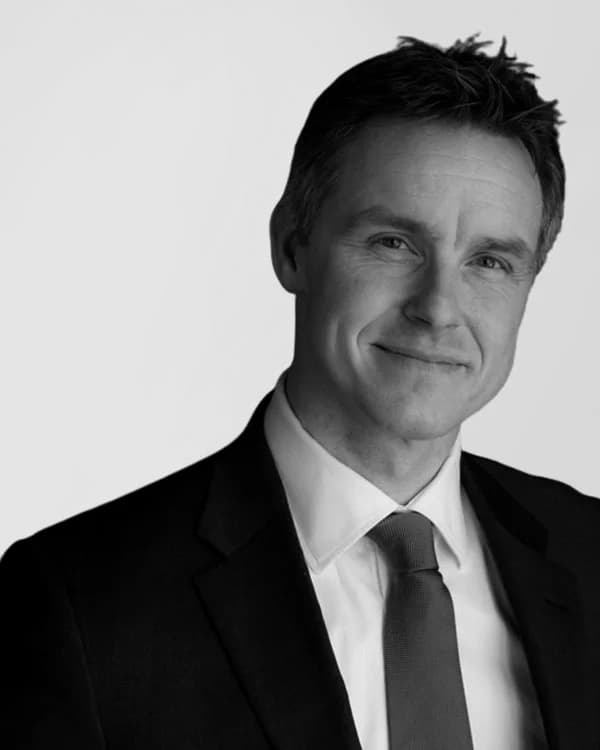
2.5 GW developed at prior firms, origination through investment readiness

30 years building the relationships behind the pipeline
Track records shown are the individual's, earned at the firms named.
Meet the teamA used aeroderivative is worth what its records and its hot section say it is worth. Here is the order we work through, and the questions that decide the price.
The gas turbine and reciprocating engine market has shifted structurally, not cyclically — and the buyers who understand the difference are already positioning.
If you know when you need power and roughly how much, we can tell you quickly whether we have a path to it. Initial conversations happen under NDA.